
Exploring the language of music — Esplorare il linguaggio della musica
English Version
Exploring the language of music
Another Mentor of music has been coming to Natures for over a year now, with the aim of exposing children to music in a meaningful way.
Today, another Mentor of music placed a mat to create a shared instrument setup, which facilitates social interaction and mirroring, close to where the Hub children were engaged in free play. As another Mentor of music began softly playing the ukulele, the children's attention was spontaneously captured. Slowly, led by their curiosity, the Hub children joined the music space.
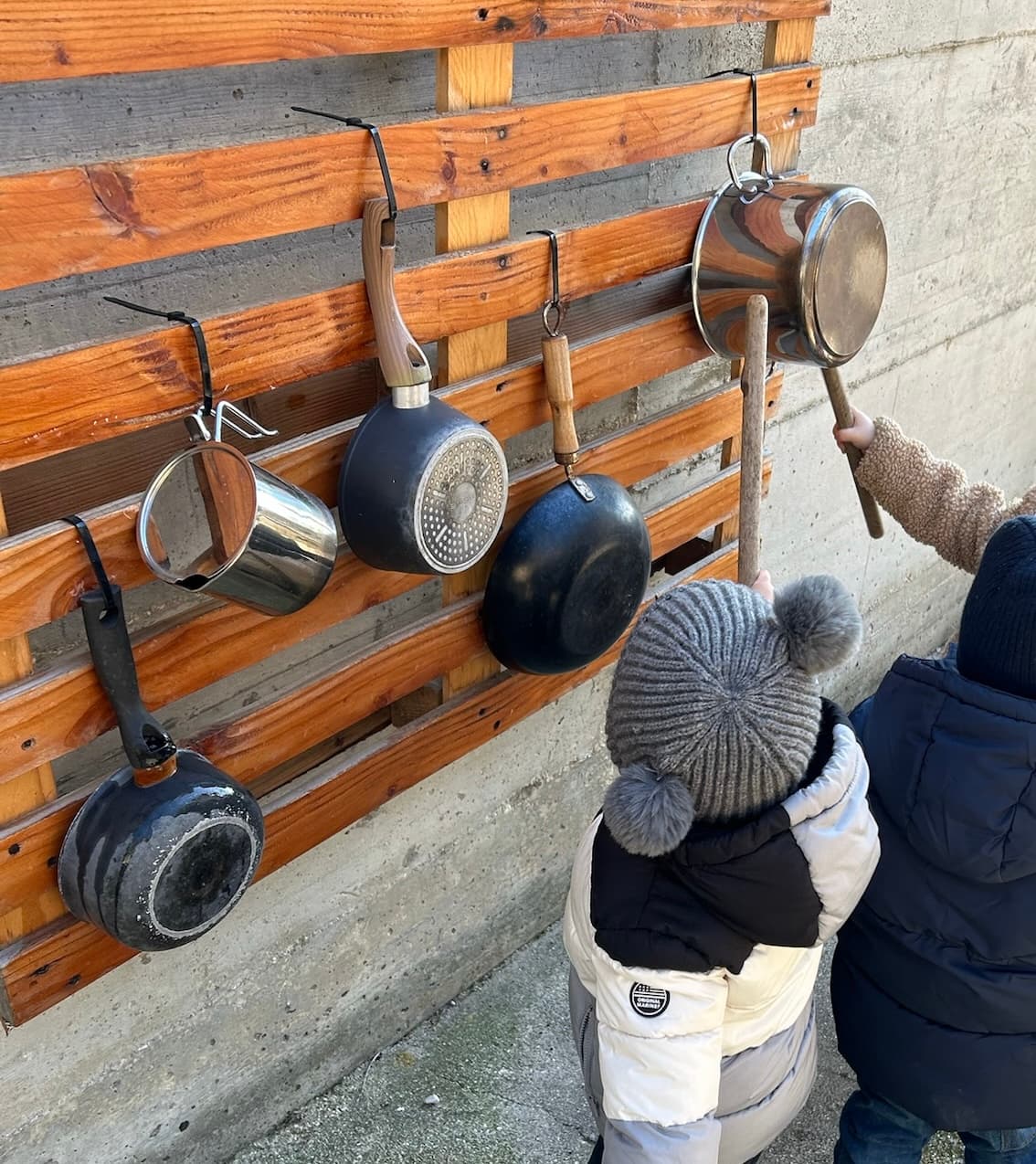
They began by exploring the different percussion instruments offered and tried to figure out the ukulele strings.
Through the melody "Checking out our shakers", another Mentor of music exposed the Hub children to musical concepts such as fast and slow, high and low, quiet and loud.
This was supported by physical movements where children were invited to reach up to the sky and tap on the ground, connecting with the environment around them. Another Mentor of music slowly introduced the cue "stop", as this powerful structural play-based experience can translate directly into everyday self-regulation, focused attention, and growth in their social awareness.
As this requires children to refine their listening skills to notice sudden changes in rhythm, beat and tempo, it also supports their language development.
Exposing children to meaningful music explorations from a young age supports natural emotional regulation development. Music provides a safe space for children to experience high energy (like playing fast and loud) and then learn how to return to a calm, quiet state.
Music is a non-verbal vehicle for expression and emotional release, as through musical instruments children are invited to express feelings, particularly when verbal communication is not yet available.
Moreover, it improves children's motor skills, coordination, and range of movement through cognitive stimulation, as they practise concentration, memory, and spatial awareness.
Today's music experience allowed children to foster autonomy, as they were invited to choose their instruments and independently play them.
The children moved in and out of the shared instrument setup as their interest pleased. Mentors observed [child] displaying good sharing of the musical instruments with peers, and [child] was very attentive to the different tapping he could make on the drum and, at times, explored his voice as well.
With kindness, Mentor Sofia
Versione Italiana
Esplorare il linguaggio della musica
Un'altra mentor di musica viene a Natures da oltre un anno, con l'obiettivo di esporre i bambini alla musica in modo significativo.
Oggi un'altra mentor di musica ha steso un tappeto per creare uno spazio condiviso con strumenti musicali, facilitando l'interazione sociale e il mirroring, vicino a dove i bambini dell'Hub erano impegnati nel gioco libero. Quando un'altra mentor di musica ha iniziato a suonare dolcemente l'ukulele, l'attenzione dei bambini è stata spontaneamente catturata. Lentamente, guidati dalla loro curiosità, i bambini dell'Hub si sono uniti allo spazio musicale.
Hanno iniziato esplorando i diversi strumenti a percussione offerti e cercando di capire le corde dell'ukulele.
Attraverso la melodia "Checking out our shakers", un'altra mentor di musica ha esposto i bambini dell'Hub a concetti musicali come veloce e lento, acuto e grave, piano e forte.
Questa esperienza è stata supportata da movimenti fisici in cui i bambini sono stati invitati a raggiungere il cielo con le mani e a battere sul terreno, connettendosi con l'ambiente che li circonda. Un'altra mentor di musica ha poi introdotto lentamente il segnale "stop", poiché questa potente esperienza strutturata basata sul gioco può tradursi direttamente nello sviluppo dell'autoregolazione quotidiana, dell'attenzione focalizzata e della consapevolezza sociale.
Poiché questa attività richiede ai bambini di affinare le loro capacità di ascolto per notare improvvisi cambiamenti di ritmo, battito e tempo, supporta anche lo sviluppo del linguaggio.
Esporre i bambini a esplorazioni musicali significative fin dalla prima infanzia sostiene lo sviluppo naturale della regolazione emotiva. La musica offre uno spazio sicuro in cui i bambini possono sperimentare alti livelli di energia (come suonare velocemente e forte) e poi imparare a tornare a uno stato calmo e tranquillo.
La musica è un mezzo non verbale di espressione e rilascio emotivo, poiché attraverso gli strumenti musicali i bambini sono invitati a esprimere i propri sentimenti, soprattutto quando la comunicazione verbale non è ancora disponibile.
Inoltre, migliora le capacità motorie, la coordinazione e l'ampiezza dei movimenti dei bambini attraverso la stimolazione cognitiva, mentre esercitano concentrazione, memoria e consapevolezza spaziale.
L'esperienza musicale di oggi ha permesso ai bambini di sviluppare autonomia, poiché sono stati invitati a scegliere i propri strumenti e a suonarli in modo indipendente.
I bambini entravano e uscivano dallo spazio condiviso con gli strumenti seguendo il proprio interesse. Le mentor hanno osservato [child] condividere bene gli strumenti musicali con i pari, mentre [child] era molto attento ai diversi suoni che poteva creare battendo sul tamburo e, a volte, ha esplorato anche la propria voce.
Con gentilezza, Mentor Sofia